Where to buy genuine discount cycling gear in the UK
Where cycling discounts come from, how to read a price history, and the sizing and compatibility checks that stop a bargain becoming a return.
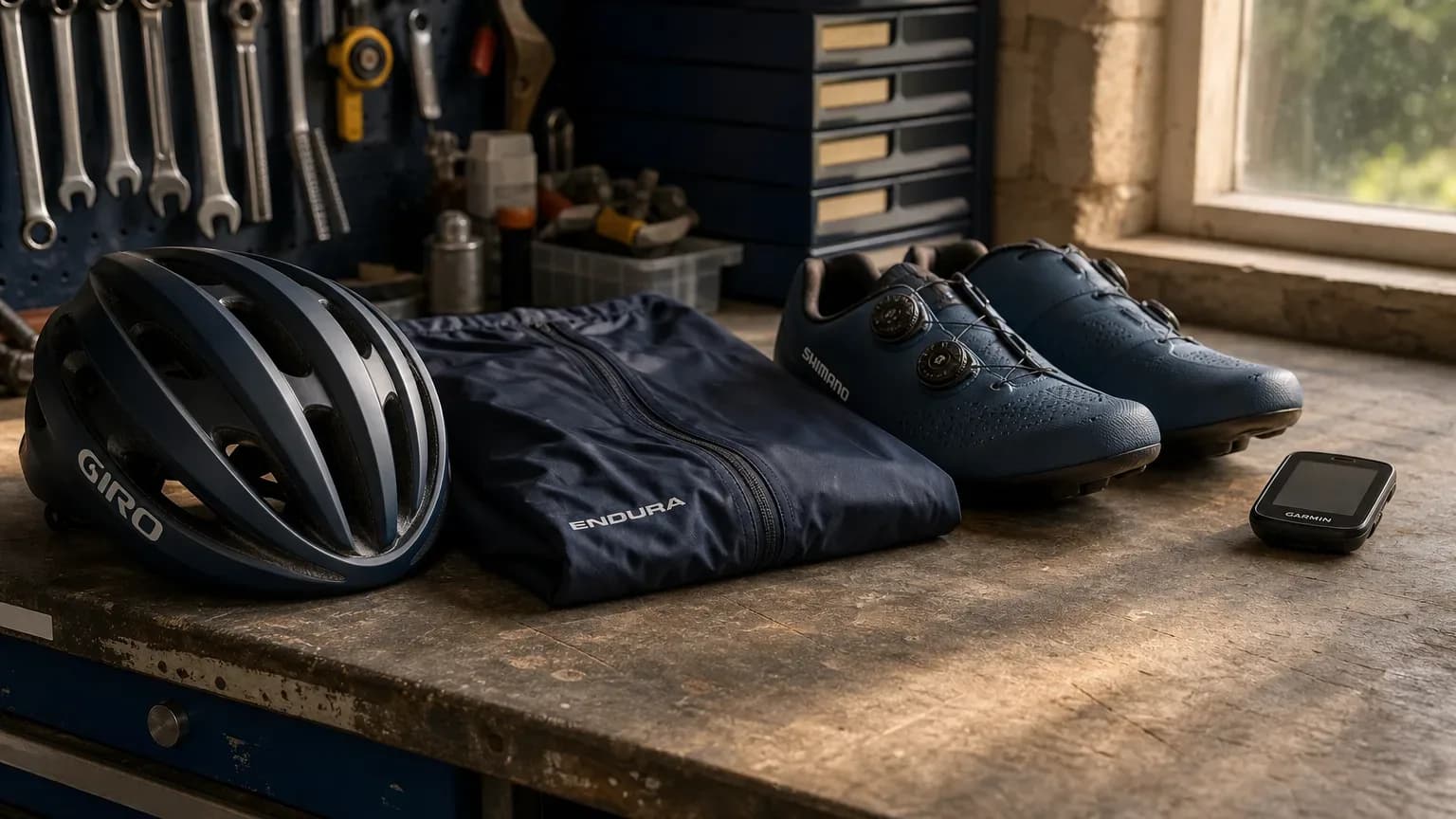
8,794 cycling deals live now
Savings up to 75% across the shops we track.


"Where is the best place to buy discount cycling gear in the UK?" has no single retailer as its answer. Merlin Cycles, Tredz, Sigma Sports, Chain Reaction Cycles and Evans Cycles all run sales, and the cheapest price on a given jersey, tyre or helmet changes from week to week. A better question is which method reliably finds a genuine reduction on the exact item you need, in the right size or spec, from a retailer with returns terms you can live with.
"Discount cycling gear" covers a wide range: clothing (jerseys, bib shorts, jackets, gloves, socks), helmets, shoes, components (tyres, brakes, bottom brackets, saddles, drivetrain parts), accessories such as bags and repair kits, and complete bikes. Each type has different risks. A discounted pair of socks costs little to get wrong. A discounted carbon road bike, or a brake set in the wrong standard, costs a lot. Throughout, it uses live listings from Sports Discounts, which checks UK cycling prices every morning against each product's price history, so you can see which reductions hold up.
Two problems come up repeatedly for online buyers. The first is inflated "was" prices, where a headline percentage off is measured against a price the item rarely sold at. The second is time: comparing the same product across several shops means opening many tabs, and prices may change before you finish. This article sets out how to check whether a discount is real, where different kinds of discounts tend to appear, how to avoid sizing and compatibility mistakes, and how to compare offers efficiently.
What makes a cycling discount genuine
A high percentage off and a real price drop are different things. The percentage only describes the gap between two numbers, and the retailer chooses one of them. If a jersey was listed at £90 for two years and sold at £60 for most of that time, "33% off" at £60 describes the normal price, not a bargain.
A price history shows what a percentage can't. These are the patterns worth looking for:
- A long flat line followed by a brief spike and a return to the original level. The spike is often the "was" price, and the "sale" is the old price.
- A price that dips below its usual range for the first time. This is a real reduction.
- A price that matches several earlier dips. The item is regularly discounted, so waiting may produce the same price again, possibly lower.
- A current price at the lowest the tracker has recorded. This is the strongest signal available, though it only covers the period tracked.
Sports Discounts checks prices every morning against the retailer's previous price and its own price history, and marks items at the lowest price it has recorded with a "Lowest ever" badge. One example from the site is the Dhb Essential Summer Cycling Socks at Evans Cycles UK, listed at £5.00 against a previous price of £14.00 (64% off), with the listing noting it is the lowest price the site has seen. The pairing of a percentage with a history note is what makes the figure checkable.
Checks to make before paying
A genuine price drop is wasted if the product doesn't suit you. Before buying, confirm:
- The exact model and model year. Cycling brands often keep the same name across seasons with changes in fit, fabric or construction.
- The size, and which size chart applies. Charts differ between brands, and sometimes between a brand's men's and women's lines.
- The colour, if it matters. End-of-line stock often reflects unpopular colourways.
- For parts, the standard and compatibility with your bike (covered in detail below).
- The retailer's returns terms for that specific item.
Red flags
Some listings deserve a closer look before you proceed:
- A large percentage with no way to see what the item has sold for previously.
- A vague "was" or "RRP" price that doesn't match what other retailers list.
- Returns terms that are unclear or hard to find.
- A price far below every other retailer for a current-season product, which can indicate a mismatched variant, a single remaining size or a stock problem.
UK consumer law sets a baseline. Under the Consumer Contracts Regulations 2013, most online purchases can be cancelled within 14 days of delivery, with a further 14 days to return the goods. Faulty items fall under the Consumer Rights Act 2015. Since April 2025 the Competition and Markets Authority has had direct powers to enforce against misleading pricing practices under the Digital Markets, Competition and Consumers Act 2024. Many retailers offer longer return windows than the legal minimum, but those terms vary, and some exclude items such as used helmets or cut-to-order products. Check the retailer's own page rather than assuming.
Where UK cyclists find discounts: three retailer types
Most discounted cycling gear comes from one of three channels.
Specialist cycle retailers include Merlin Cycles, Tredz, Sigma Sports, Chain Reaction Cycles and Evans Cycles. They carry the widest range of branded clothing, components and bikes, and they run regular sales, often on older-season clothing and end-of-line parts. Several operate stores as well as online shops, which matters if you want to try on shoes or collect an order.
Multi-category sporting goods retailers and European cycling shops sell cycling alongside running, outdoor or general sport. Deporvillage, a Spanish retailer that Sports Discounts links to, is an example of a cycling-focused European shop. Their cycling ranges can be narrower, but discounts on clothing, helmets and accessories sometimes undercut the specialists. Delivery times, import arrangements and returns processes can differ, so read the terms.
Clearance and warehouse-style listings are typically the deepest reductions, often on last-season stock, remaining sizes or discontinued lines. They carry the highest risk: limited sizes, short availability and sometimes tighter returns conditions.
Typical discount patterns
Discounts follow stock cycles rather than random promotions:
- Older-season clothing: new colourways and fabrics arrive, and last year's lines are reduced.
- End-of-line components: when a manufacturer updates a product or a shop clears a range, the older version drops in price.
- Discontinued sizes: a jersey that is hugely discounted in XXL and XS but full price in M reflects stock, not a trend.
- Seasonal shifts: summer-weight jerseys and bibs fall in price towards autumn, and winter jackets and thermal tights drop in spring. Buying out of season often means the best prices, at the cost of waiting.
Which channel is best depends on what you're buying and how much risk you can accept. Accessories and socks suit almost any channel. Shoes, helmets and bikes suit retailers with clear returns policies, even if the price is slightly higher.
Why one store's "was" price can't be trusted alone
Prices on cycling sites change for several reasons: repricing after a supplier update, promotions that start and end, stock clearance, and competitors matching each other. A snapshot compared with a snapshot doesn't capture any of it.
Take a jacket listed at £120 on one site, "reduced" from £200. On another site it sells at £135, reduced from £150. The first looks better by percentage and the second is better by cash cost if you can find it in the right size. Neither number says whether £120 is a good price compared with what the jacket sold at last month.
The practical fix combines three checks:
- Price history for the exact product, to see where today's price sits in its usual range.
- Current availability in your size, across more than one retailer.
- Each retailer's returns terms, which determine what a wrong choice costs.
This is the approach behind Sports Discounts. The site lists deals from UK retailers, checks prices each morning and shows the percentage reduction against the retailer's previous price. Opening a listing shows the price history so you can see whether the current price is a real low. Product pages can also show the same item across several shops: the Topeak Gravel Gear Bag with Repair Kit, for example, is listed at two UK retailers from £27.00. Sports Discounts doesn't sell anything itself. You click through and buy from the retailer, using its delivery, returns and guarantees.
Black Friday timing
Black Friday falls on 27 November 2026. Retailers typically advertise large percentages in the run-up, so the weeks beforehand are the useful time to note the current price on items you want. If the price on the day isn't below that earlier figure or its history, the "deal" is mostly a headline.
Buying discounted cycling clothing online without sizing mistakes
Sizing is the most common reason discounted kit gets returned, and clearance stock often has the strictest conditions.
The sizing variables
- Jerseys: cuts range from race fit to relaxed. Length matters as much as chest size, because a short body rides up when you're in the saddle. Check whether the brand lists "race" or "club" cuts.
- Bib shorts and tights: these are designed to fit snugly. Chamois placement and leg-gripper width vary between brands, and a size that's slightly too small or large causes more discomfort than it would in ordinary clothing.
- Gloves: measured around the palm or by hand length, depending on the brand. Padding and seam placement make a difference on long rides.
- Helmets: sized by head circumference, normally measured about 2 cm above the eyebrows. A small is roughly 51 to 55 cm and a medium roughly 55 to 59 cm on many models, but ranges differ by brand, so use the manufacturer's chart.
- Shoes: usually EU sizes, but lasts differ in width, volume and heel shape. Brands vary on whether half sizes exist. Wide-foot riders should check whether a wide version is offered.
A buying flow that avoids waste
- Measure yourself: chest, waist, hips, inside leg and head circumference, and, for shoes, foot length against a ruler.
- Find the brand's own size chart for that line and match your measurements to it, rather than relying on a size you wear in another brand.
- Read the returns terms: window length, who pays return postage, and whether helmets, shoes or sale items are excluded.
- Only then compare prices across retailers.
Doing the steps in this order matters. A discount of 60% on the wrong size is a cost, not a saving, if you're then unable to return it cheaply.
Seasonal layering: what usually discounts
Layering kit tends to follow predictable patterns:
- Base layers are low-cost and plentiful, and discounts are common year-round.
- Mid layers (long-sleeve jerseys, thermal jerseys) are reduced as seasons change.
- Outer layers (waterproof and windproof jackets, gilets) are priced higher, so discounts are larger in cash terms, but fit and fabric differences between seasons are significant.
Winter cycling kit deals often appear in late winter and spring, but early autumn can also see reductions on previous-year stock before the new range lands. If you ride year-round, a clearance buy of last winter's jacket at the end of the season can be a sensible approach, provided the fit is certain.
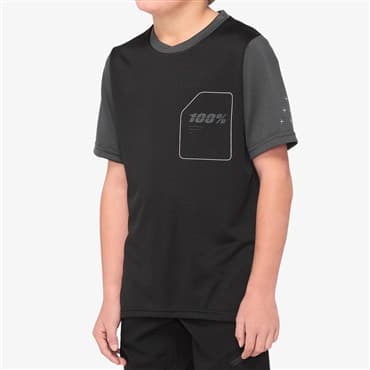
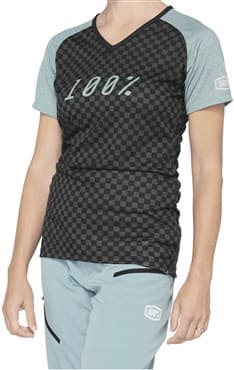
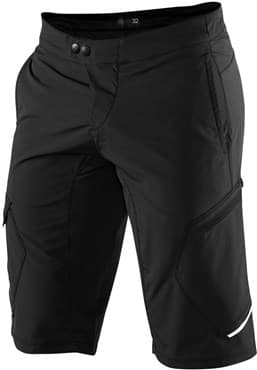
Cycling clothing deals
- Team Cycles · Unisex
Team Cycles Short Sleeve Mountain Bike Jersey in Black
£10.00Was
£40.00at Team Cycles
- Fox · Unisex
Fox Clothing Fox Ranger Shepherds Drirelease Long Sleeve Mountain Bike Jersey in Black
£13.75Was
£54.99at Team Cycles
- See all


Buying discounted bike parts: compatibility comes first
Component discounts can be real and still useless to you. A tyre at 50% off helps only if it fits your rim and frame.
The standards to confirm
- Drivetrain: number of speeds (such as 11 or 12), the brand's shifting standard, and the freehub body type on your wheels. Shimano, SRAM and Campagnolo parts are not freely interchangeable across all groupsets.
- Brakes: rim or disc. A Shimano BR-M430 V-brake shoe set suits V-brakes, not disc brakes. Disc systems add mount standards (post mount or flat mount), fluid type (mineral oil or DOT), and rotor size and fixing.
- Tyres: tyre size (for example 700x28c or 29x2.4), the rim width and frame clearance, and the type: clincher, tubeless or tubular. A tubular such as the Vittoria Corsa G2.0 needs tubular-specific rims and rim tape or glue, so it won't mount on a standard clincher wheel.
- Axles: thru-axle or quick release, plus axle diameter and spacing, such as 12x100 front or 12x142 rear.
- Rotors: commonly 140, 160 or 180 mm, with six-bolt or centre-lock fixings.
- Bottom brackets and cranks: the bracket shell width and type, and the crank spindle standard. A listing such as the Campagnolo bottom bracket cups at 51 mm diameter describes a specific interface and won't suit other frame or crankset standards.
When a "real" discount still fails
Common failures include buying a 12-speed cassette for an 11-speed drivetrain, brake pads that don't match the caliper, and a bottom bracket that needs a tool or adaptor you don't have. A retailer may accept a return for an incompatible part, but not always, especially for items that have been fitted.
A pre-purchase checklist for parts
- Note your bike's make, model and year, and any later changes to it.
- Photograph or measure the existing part, and look up its standard in the manufacturer's documentation.
- Check the new part's specifications on the manufacturer's page, not only the retailer's summary.
- Confirm whether adaptors, bolts, tools or fluids are included.
- If it's a brake or safety-critical part, consider having a bike shop confirm it before purchase and fit it afterwards.
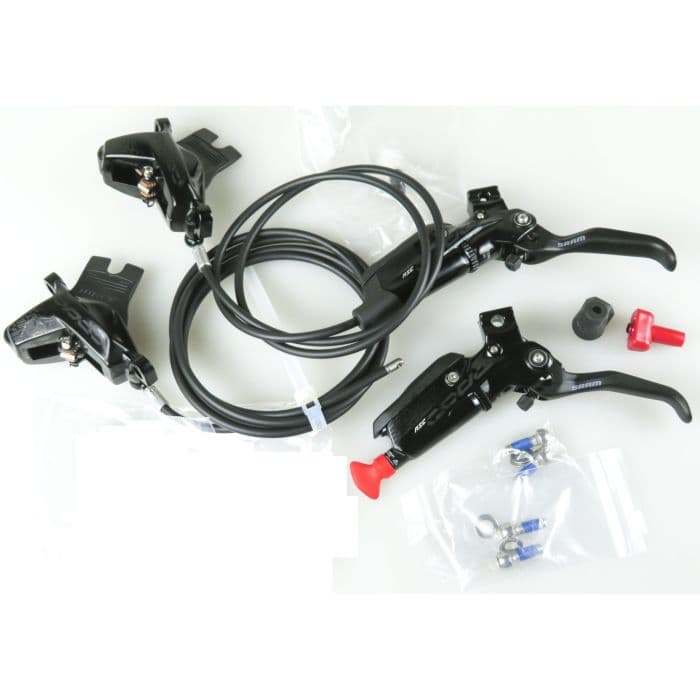
For browsing, the components deals section lists tyres, brake shoes, saddles, brake sets and bottom bracket parts together, so you can compare equivalent items from several UK retailers before choosing.
Cycling component deals


Using a deals hub to compare UK cycling retailers
A deals aggregator saves time if used methodically. A workable sequence:
- Start in the cycling category and narrow by type: clothing, components, accessories or kit.
- Narrow by brand if you have a preference.
- Sort by saving or price, then filter by segment (men's, women's, kids, unisex) and size where the listing shows it.
- Open the deal for the exact item and check the price history and whether the current price is flagged as the lowest recorded.
- Click through and confirm the product, size and colour on the retailer's page, then read the delivery and returns terms.
On 26 October 2026, the Sports Discounts cycling page showed 8,794 live deals tracked across 17 UK retailers. The biggest listed saving was 75% off, the average reduced deal was 41% off, and prices ran from £3 to £10,499. These figures describe that catalogue on that date, not the UK market, and they change daily as retailers adjust stock and prices.
For larger purchases, the bike deals section lists complete bikes such as the Orbea Orca M20i Ltd and Giant Propel Advanced SL 1. Frame size, geometry and componentry matter more than the price tag for bikes, so verifying the exact model year and specification is essential.
What UK cycling retailers do well, and what they leave out
The major specialists are strong sources of stock and, often, of good prices:
- Merlin Cycles has a broad product range, prominent trust signals such as reviews and service promises, and frequent large percentage reductions.
- Tredz has strong category navigation and regular seasonal updates.
- Sigma Sports curates categories and seasonal promotions and links to guides from its homepage.
- Chain Reaction Cycles offers wide category coverage and finance options.
- Evans Cycles has a UK-wide store presence and services such as click and collect.
They are retailers, and their pages are built to sell stock. Shoppers who want to check whether a "sale" is real, or whether a part fits, need a separate source for that decision, and that is the role a price-history-based hub and a buying framework fill.
Matching your purchase to the right buying route
Different purchases call for different approaches:
- Seasonal clothing (jerseys, jackets, bib shorts): compare several retailers, favour those with clear returns and free or low-cost return postage, and buy off-season where you can. Check price history to avoid paying a pre-inflated "was" price.
- End-of-line components: price history matters most here, since older parts are often discounted deeply and repeatedly. Confirm compatibility before checking price.
- High-compatibility parts (brakes, drivetrain, bottom brackets, wheels): verify the standard first, buy from a retailer that clearly accepts returns on unfitted parts, and accept a slightly higher price over a cheaper unclear listing.
- Helmets and shoes: fit confidence outweighs savings. Buy from retailers with straightforward returns, or try the size in a shop first and then compare online prices.
When to skip the cheapest deal
If sizing risk is high, the cheapest listing is often not the best. A 70% reduction on shoes in a size you haven't tried, from a retailer with limited returns, can cost more than a 40% reduction from one that makes returns easy. The same applies to helmets, where an incorrect fit affects safety. Cheap listings in a single remaining size are usually the clearest example of a deal that suits only people who already know that size works.
Practical takeaways
Three rules cover most cases:
- Verify the price drop. Check price history, not just the percentage, and look for a lowest-recorded price where one is available.
- Check size and compatibility. Use the manufacturer's size charts and technical specifications, and match standards before comparing prices.
- Confirm returns terms. Read the retailer's policy for the specific item before buying.
A short workflow follows from that: identify exactly what you need, verify the price against its history, compare offers across retailers in your size or spec, and then buy from a retailer whose returns terms match your risk.
Sports Discounts lists cycling reductions from UK retailers, checks them each morning and shows price history so you can see whether a price is a real low. You then buy from the retailer directly, with its own delivery, returns and guarantees. To compare current offers, browse the live cycling deals and open each listing's price history before you buy.
Shop the deals
- Team Cycles · Unisex
Team Cycles Short Sleeve Mountain Bike Jersey in Black
£10.00Was
£40.00at Team Cycles
- Fox · Unisex
Fox Clothing Fox Ranger Shepherds Drirelease Long Sleeve Mountain Bike Jersey in Black
£13.75Was
£54.99at Team Cycles